
Find California Family Court Records
California family court records include cases for divorce, legal separation, child custody, child support, domestic violence restraining orders, and parentage actions. These records are kept by Superior Courts in each of California's 58 counties. The public can view certain parts of family court records at the courthouse. Remote online access is limited by state rules that protect privacy in sensitive family law matters. You can find case information by visiting a courthouse in person or using county-specific online portals where available for basic case details like registers of action and hearing calendars.
California Family Court Quick Facts
Where Family Court Records Are Kept
Each county Superior Court in California maintains its own family law records. These courts handle all family law cases filed in that county. The records stay with the court where the case was filed. Los Angeles County keeps family law records at multiple courthouse locations. San Diego County centralizes most family cases at their downtown location. Smaller counties may have just one courthouse that handles all case types.
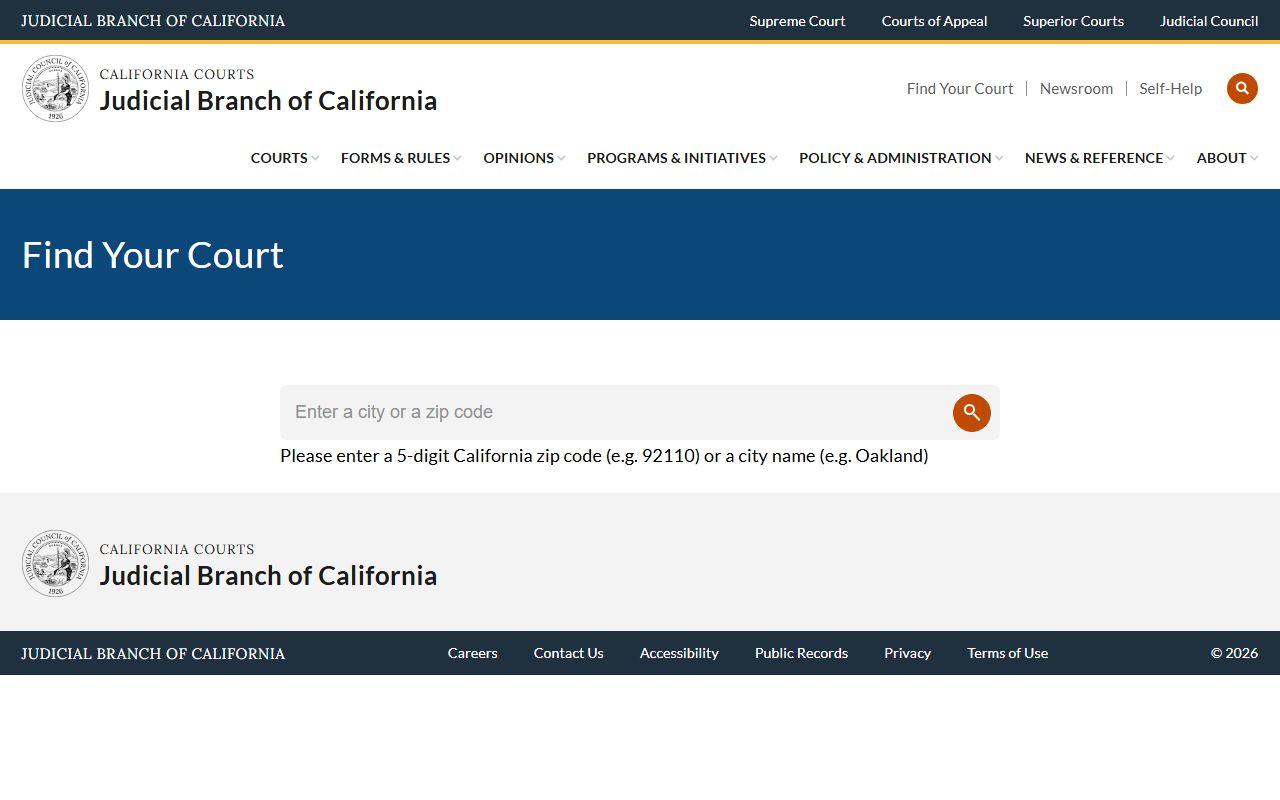
California courts have moved many records to electronic format in recent years. Some counties use systems like Odyssey or Tyler Technologies case management software. Others have custom-built portals for their jurisdiction. Each county decides what level of public access to provide for family law cases. The state court system website at courts.ca.gov/find-my-court helps you locate the right courthouse for any county in California.
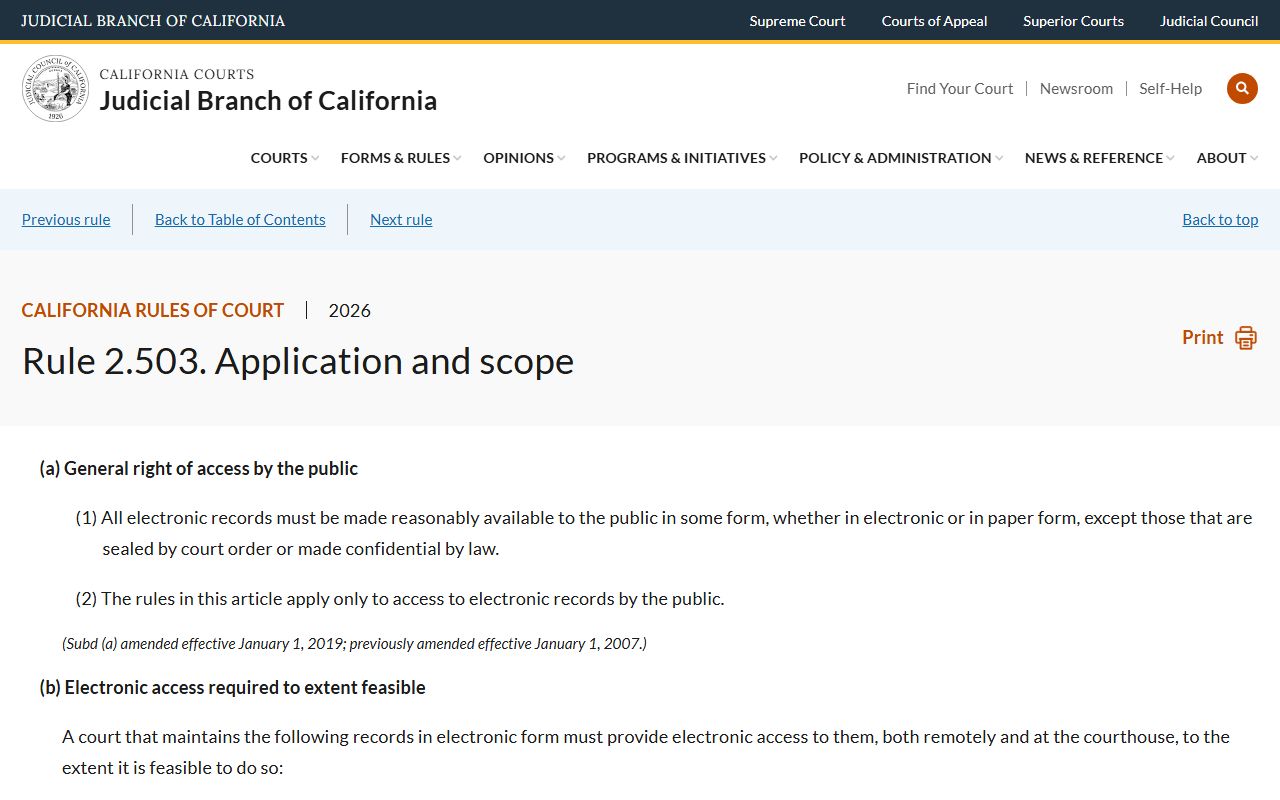
You cannot access full family court case files remotely in most situations. California Rules of Court Rule 2.503 restricts remote access to sensitive case types. Family law cases fall under this restriction. The rule allows courthouse electronic access but blocks remote viewing of most documents in dissolution, custody, and domestic violence cases.
Some counties provide limited online case information despite these restrictions. Sacramento County offers free online access to registers of action and calendars through their public portal at services.saccourt.ca.gov/PublicCaseAccess. Orange County and San Diego County have similar systems. These portals show basic case information but not the actual filed documents. You still need to visit the courthouse to view or copy most papers in a family law case file.
Family Law Case Types
Dissolution of marriage cases make up a large part of family court filings. A dissolution case ends a marriage or domestic partnership. The court issues orders on property division, spousal support, and child-related matters if the couple has kids. These cases can be uncontested or contested depending on whether both parties agree to the terms.
Legal separation cases are similar to dissolution but do not end the marriage. Couples remain legally married but live apart under court orders. The court divides property and handles support issues just like in a dissolution. Some people choose legal separation for religious reasons or to keep health insurance benefits that require marriage. California law treats legal separation and dissolution cases under the same statutes and procedures.
Child custody and visitation cases can be filed as part of a dissolution or as standalone actions. Parents who were never married file parentage cases to establish custody, visitation, and support orders. The court uses the best interest of the child standard when making custody decisions. Factors include the child's health, safety, and welfare, plus any history of abuse by a parent.
Domestic violence restraining order cases are heard in family court when the parties have a close relationship like marriage, dating, or living together. These cases move faster than other family law matters. A person can get a temporary restraining order within 24 hours if they show immediate danger. A hearing for a permanent order happens within 21 days. The court can order the restrained person to stay away, move out of a shared home, and attend counseling programs.
Getting Access to Court Records
Visit the courthouse in person to view family law case files. Go to the clerk's office during business hours. Bring photo ID. Give the clerk the case number or the names of the parties. The clerk will pull up the case on their computer system. Some courts let you view records on public computer terminals. Other courts print out what you need to see.
You can make copies of most documents in a family law case. Courts charge per page for copies. The fee is 50 cents per page at most California courts. Certified copies cost more. Certification adds $40 to the total copy fee. You need certified copies for official purposes like filing with another agency or using the document in a different court proceeding.
Some parts of family law cases are confidential by law. Courts will not show you confidential documents even if you ask. Adoption records are sealed and only parties to the adoption can access them. Paternity case files are confidential under California Family Code Section 7643. Family conciliation court records cannot be disclosed under state law. Child custody evaluations may be restricted depending on court order.
If you were a party to the case, you have broader access rights. You can get copies of all documents you filed or that were served on you. You can review the entire case file including confidential reports if the court allows. Former spouses in a dissolution case can access their full case file years after the case closed. Parents in custody cases can see court reports about their children.
County Online Case Portals
Many counties offer some form of online case lookup even with the restrictions on family law records. These systems show very limited information compared to what you can see at the courthouse. Register of actions lists each document filed and each court event. It does not show the content of those documents. Case calendars show upcoming hearing dates and times.
Los Angeles County provides case name search at www.lacourt.org/paos/v2public/CivilIndex and party name search through LA Court Connect. The system charges fees for each search and document view. Family law records from 1983 forward appear in the database. You pay $1 to $4.75 per search depending on search type. Alameda County uses an ePortal system but it often has connection issues and limited functionality for public users.
Riverside County hosts a public access portal at epublic-access.riverside.courts.ca.gov/public-portal with case search by name or number. San Bernardino County offers both a standard portal and the DASH system at dash.sb-court.org for self-help resources and limited case access. Santa Clara County portal at portal.scscourt.org allows case lookup with some register of actions details.
Note: Even where online portals exist, you cannot view actual filed documents remotely for family law cases due to Rule 2.503 restrictions.
Divorce Certificates vs Court Records
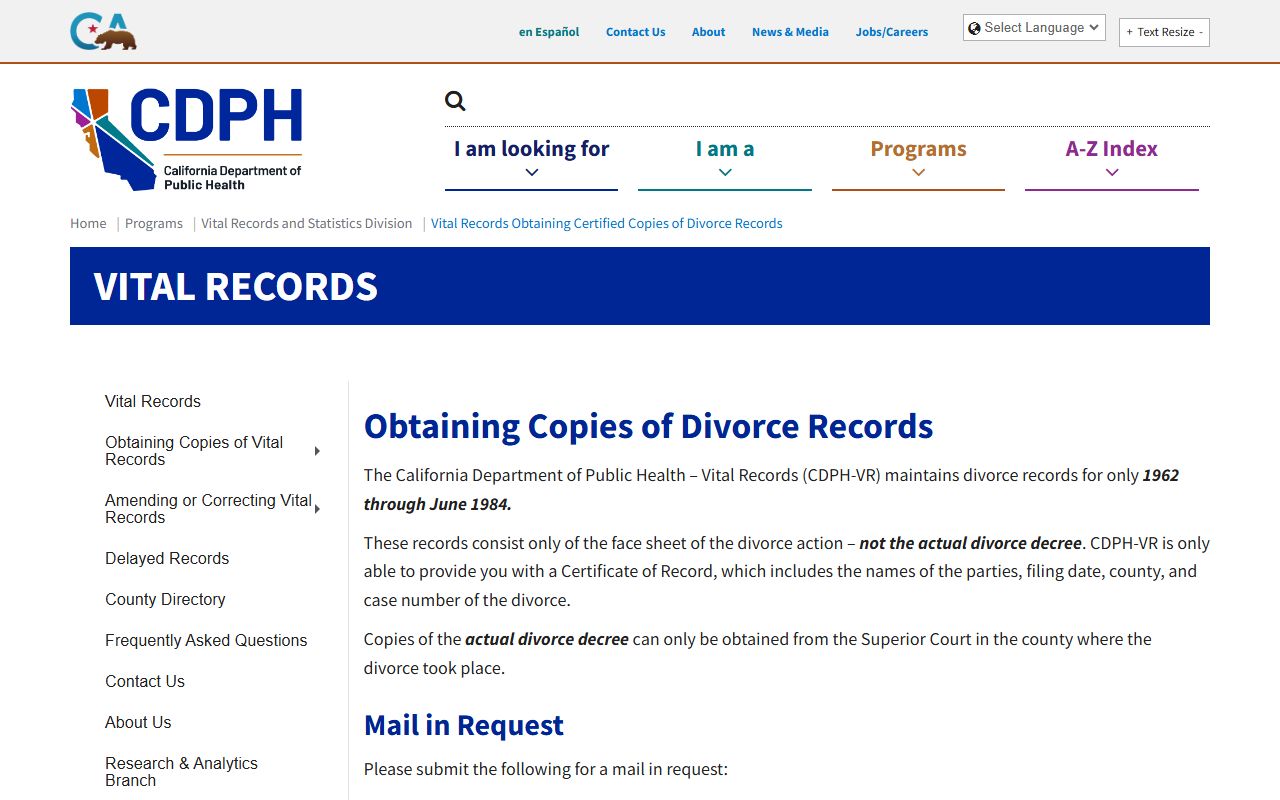
The California Department of Public Health keeps divorce records separate from court records. These are not the same as court case files. CDPH has divorce certificates for divorces that happened between 1962 and June 1984 only. This is a very limited time period. The certificates contain just basic information from the divorce. You get names of both parties and the date of divorce. No other details appear on these certificates.
CDPH divorce records do not include the actual divorce decree. The decree is the court order that dissolved the marriage. Only the Superior Court that heard the case has the decree and full case file. If you need a copy of your divorce decree, you must contact the county court where your divorce was finalized. The health department cannot provide court documents.
CDPH charges $18 for a search and one certified copy of a divorce record if they find it in their system. Send requests to California Department of Public Health, Vital Records, P.O. Box 997410, Sacramento, CA 95899-7410. Include both spouses' names, approximate divorce date, and county. Processing takes 7 weeks on average but can run up to 6 months during busy periods. More information is available at www.cdph.ca.gov/Programs/CHSI/Pages/Vital-Records-Obtaining-Certified-Copies-of-Divorce-Records.aspx.
Court Filing Fees and Costs
Filing a new family law case costs $435 for the first paper in most California counties. This fee applies to dissolution petitions, legal separation petitions, and other initial family law filings. The responding party also pays a fee to file their response, though it may be less than the initial filing fee in some counties. These fees fund court operations and are set by state law.
Additional filings during a case cost less. A motion filing fee is $60. This covers requests for temporary orders, modifications, and other motions filed after the case starts. Some filings have no fee, like income and expense declarations or certain child support forms.
Fee waivers are available if you cannot afford court fees. File form FW-001 to request a fee waiver. The court looks at your income, expenses, and public benefits status. If approved, you pay nothing to file your case or motions. Fee waivers do not cover process server fees or other non-court costs. You can find fee waiver forms and instructions at www.courts.ca.gov/selfhelp-feewaiver.htm.
California Family Law Statutes
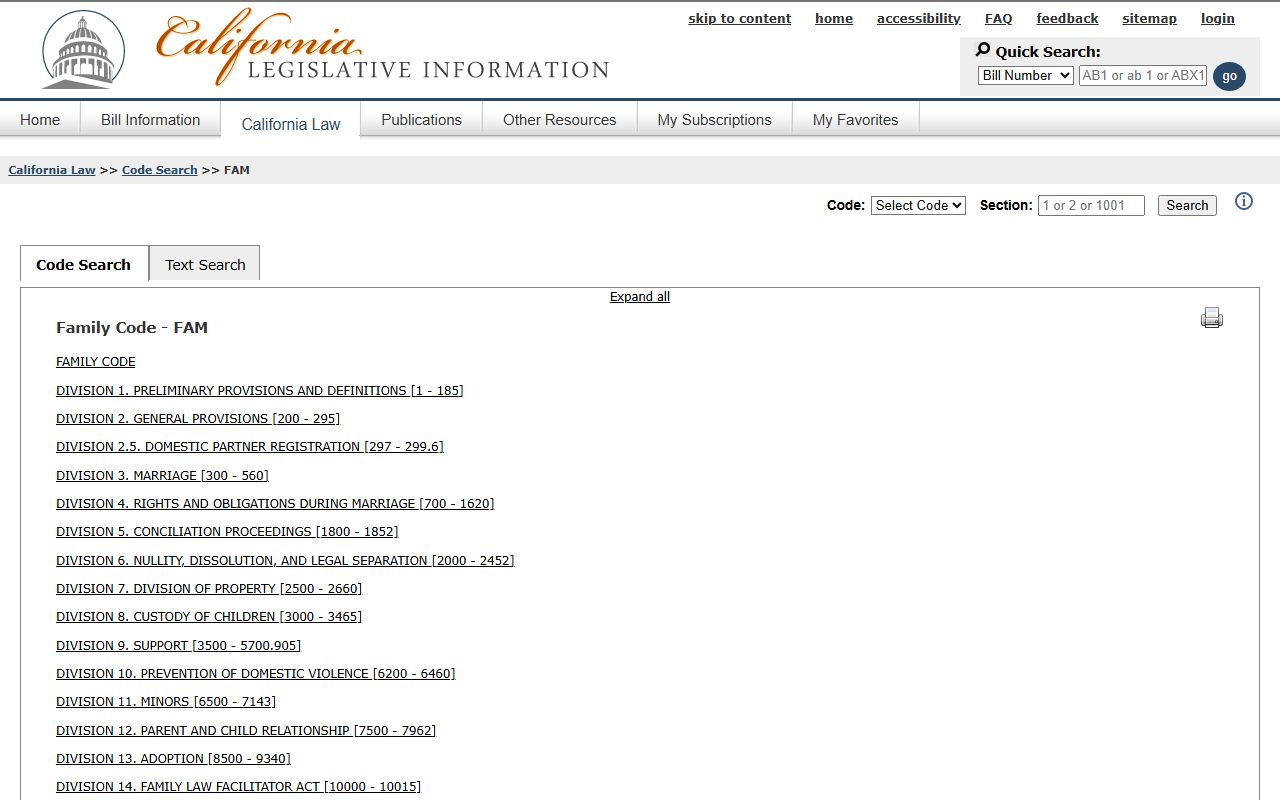
The California Family Code contains most family law statutes. Dissolution and legal separation rules appear in Division 6 of the Family Code. Child custody and visitation laws are in Division 8. The full Family Code is available at leginfo.legislature.ca.gov/faces/codesTOCSelected.xhtml?tocCode=FAM for anyone to read.
Court record access rules come from multiple sources. California Rules of Court Rule 2.503 limits remote public access to family law case records. The rule requires courthouse electronic access where feasible but prohibits remote access to dissolution, custody, domestic violence, and juvenile cases. Rule 2.550 sets standards for sealing court records and presumes records should be open unless sealed by court order. Rule 2.551 establishes procedures for filing records under seal.
California Government Code Section 68152 addresses court records retention periods. Family law records must be kept for specified time periods before destruction. Adoption records are retained permanently. Some older records have been transferred to county archives or the California State Archives.
Self-Help Centers and Legal Aid
Most California counties operate self-help centers at their courthouses. These centers provide free help with family law forms and procedures. Staff cannot give legal advice but can explain court processes and help you fill out forms. Some centers offer workshops on topics like divorce, custody, and child support. Call your county court to find their self-help center hours and services.
Legal aid organizations serve low-income Californians with family law issues. Bay Area Legal Aid covers Alameda, Contra Costa, Marin, Napa, San Francisco, San Mateo, and Santa Clara counties. Call 1-800-551-5554 for intake. Legal Aid Foundation of Los Angeles serves LA County and can be reached at (800) 399-4529. Central California Legal Services covers the Central Valley and can be contacted at (800) 675-8001.
Many counties have family law facilitator offices that help with child support cases specifically. The facilitator can help you calculate support amounts, prepare support orders, and understand support modification procedures. This service is free. San Diego County operates a robust Family Law Facilitator program accessible at flf.sdcourt.ca.gov with extensive online resources and in-person help.
Browse by County
Find family court information for specific California counties. Each county page includes courthouse contact details, self-help center information, and local filing procedures.
Family Court Resources in Major Cities
Major cities have multiple courthouses and legal aid offices serving their residents. Select a city to learn about local family court resources and services.